🎵 Audio guide
For centuries, Acebo has been known for its handcrafted Bobbin Lace.
Although this tradition was widespread in the Sierra de Gata, only in Acebo was it of such importance and, only here has it been conserved to such an extent to the present day.
Its origin is linked to the presence of the Moors and the Jews in these rich lands, before their annexation to the Kingdom of León in the 13th century.
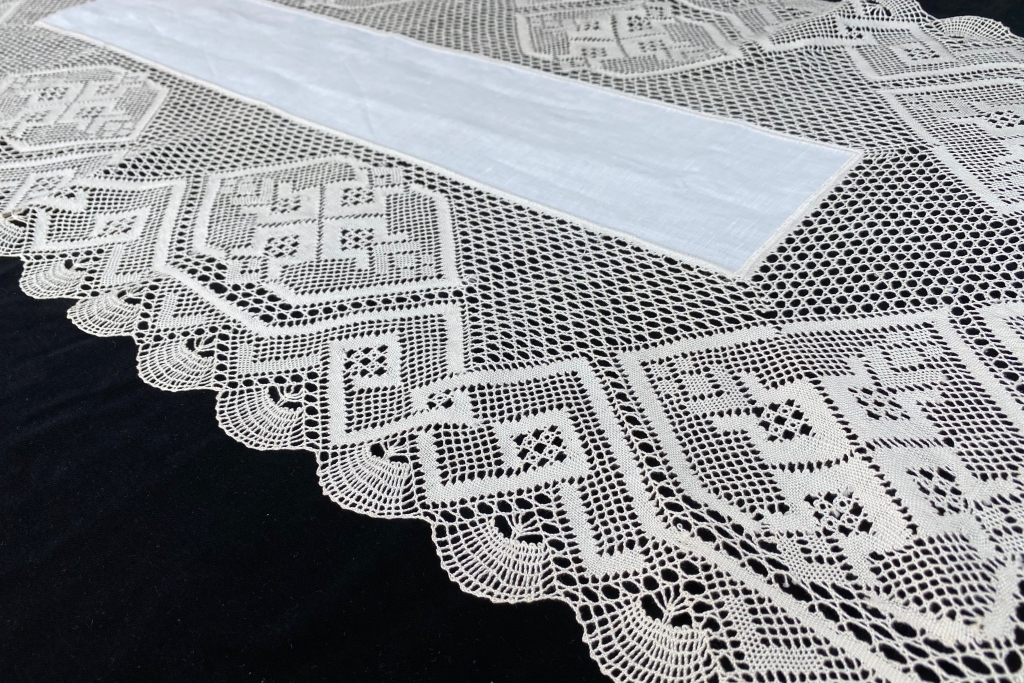
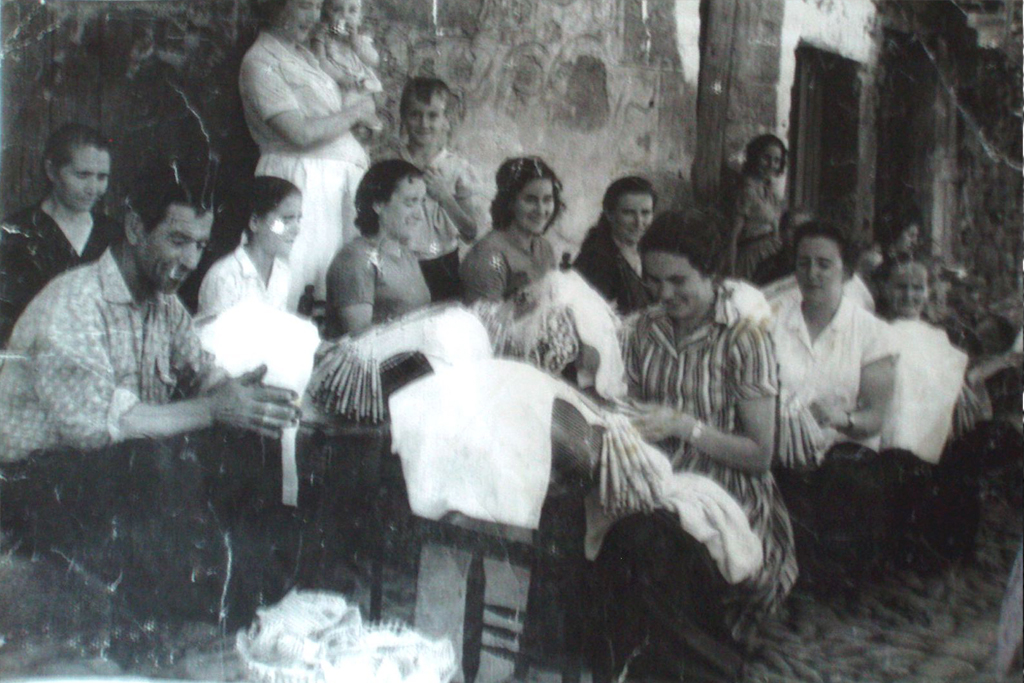
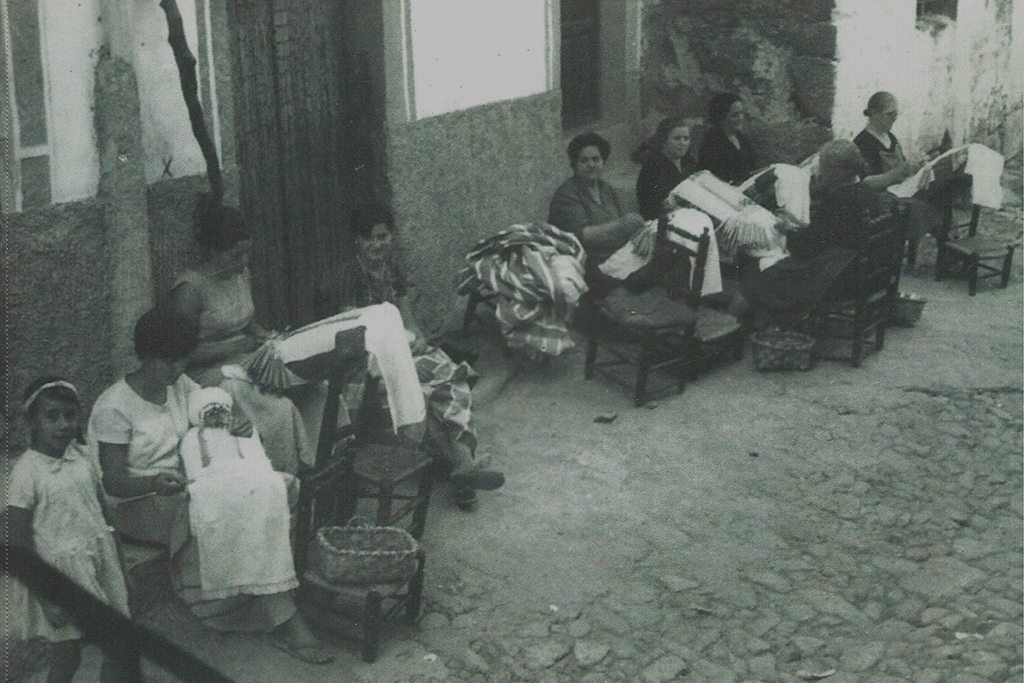
This tradition has been passed down from mother to daughter, with multiple creations for home use: detailing on clothing, shawls, table and bed linen, curtains, doormats and bridal trousseaux. Many pieces were also commissioned. This has led to the romantic image of groups of women of all ages, sitting in the street, happily chatting, their busy fingers creating the background rhythm of the bobbins “singing and dancing” on the lace pillow
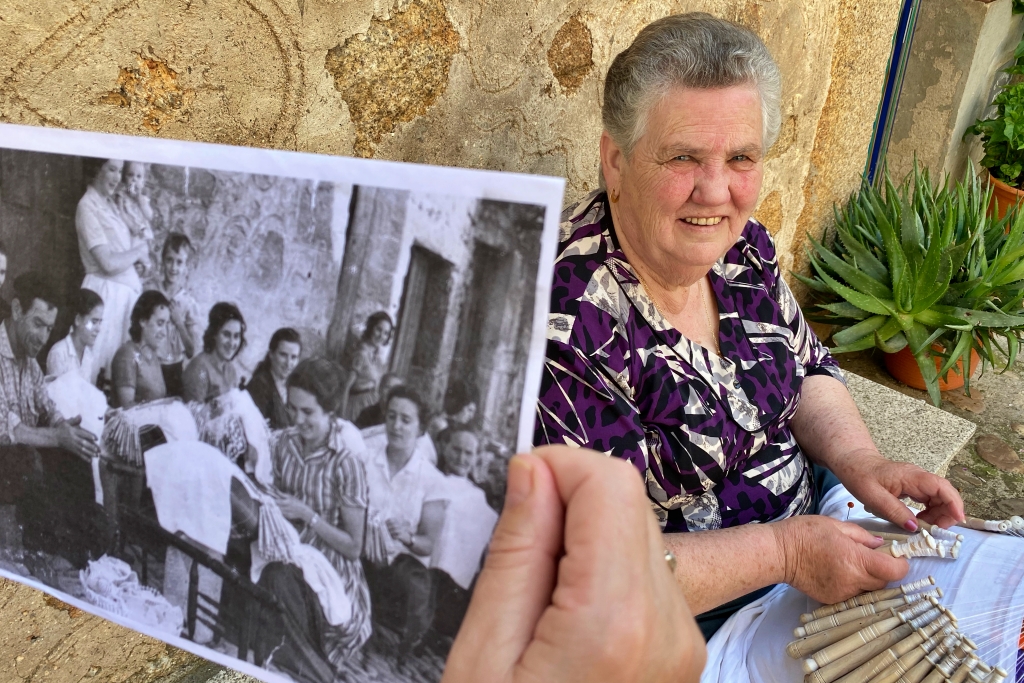
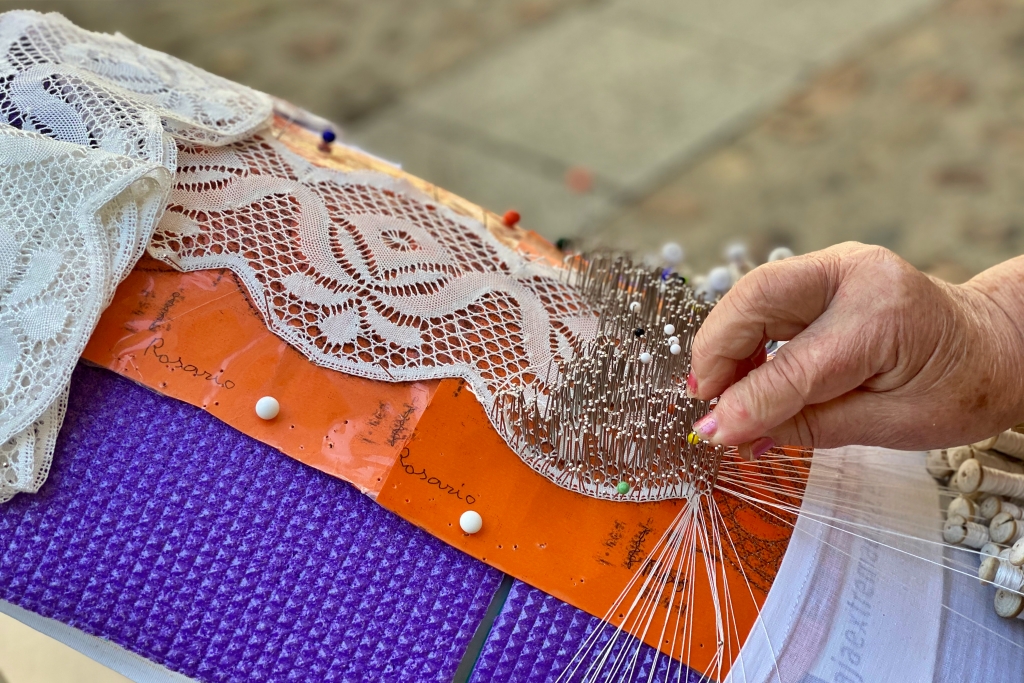
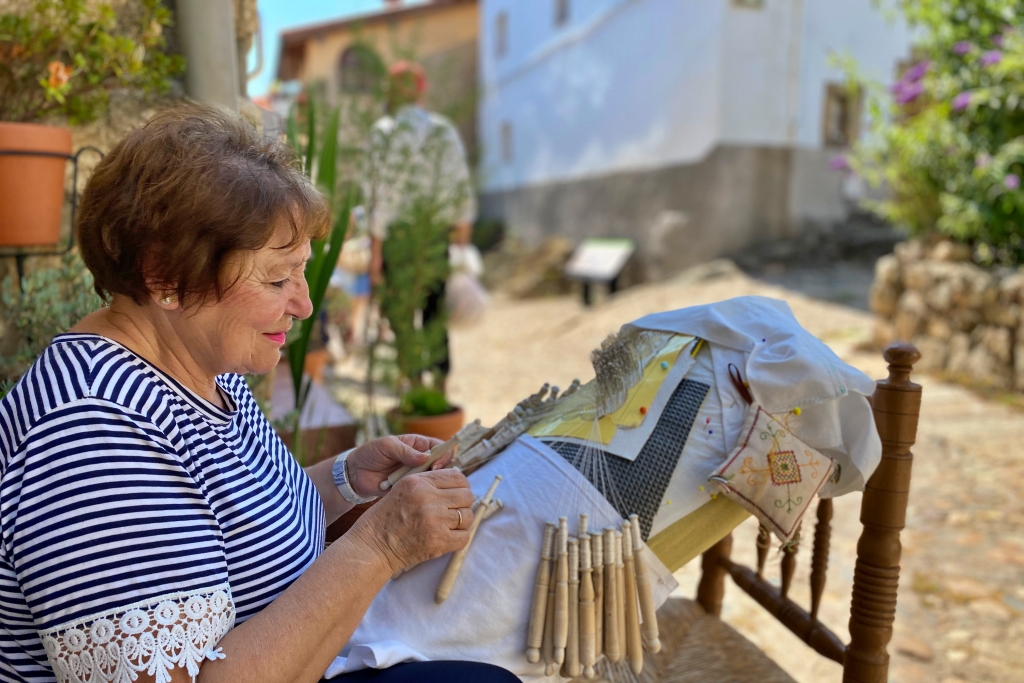
Bobbin lace making is an art form. The method uses a straw-filled pillow to which card, paper or linen is attached. On this there is a stencil of the design into which pins are placed to guide the threads which are wound around wooden bobbins. The skilful hands of the lacemakers and their fast, coordinated movements weave the bobbins to create pleasing figurative designs.
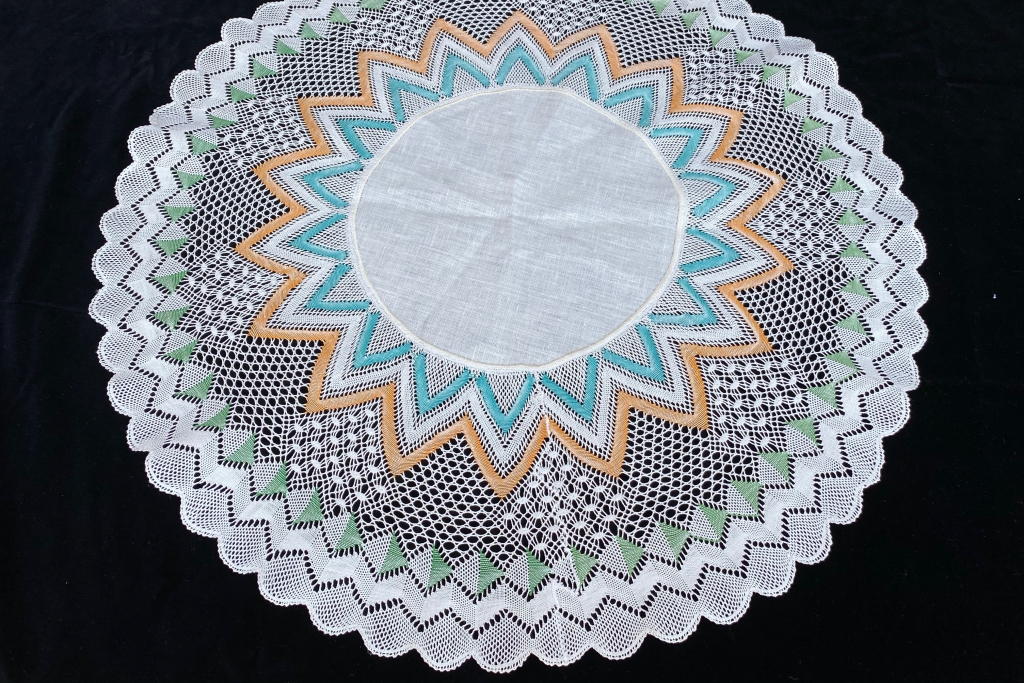
The number of bobbins varies according to the complexity of the pattern. For example, a design such as el Pucherito uses 20 pairs of bobbins whereas 30 pairs are needed to create la Pluma (the feather). There is a wealth of lace designs made in Acebo: la envidiosa (the jealous woman), la bruja (the witch), and el paseo de la Reina (the Queen’s walk) to name but a few.
But the women of Acebo refuse to let their centuries-old legacy disappear and even today they take steps to ensure the tradition stays alive. There is currently a Lacemakers Association called El Álamo (the Poplar Tree). They hold an annual event, now in its 17th year, attended by lacemakers from all over Spain. Acebo embraces its tradition and its people are proud of playing their part in keeping it alive and well.
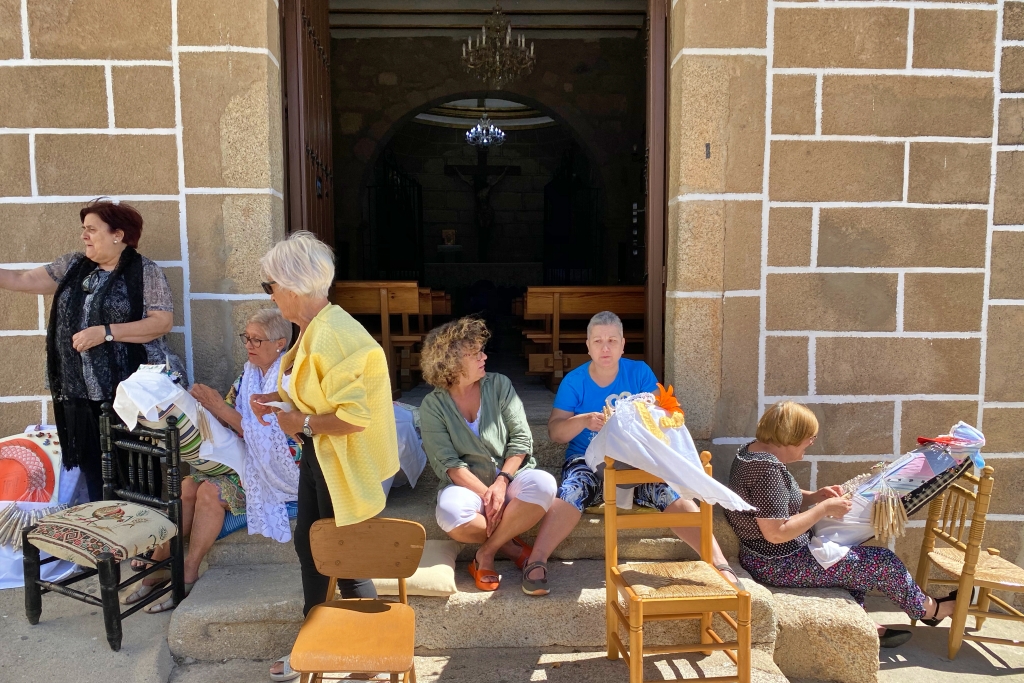
These women, with their knowledge, patience and skills are the true heroes in the story of lacemaking in Acebo.